
By the Mangroves · A Shenzhen–Hong Kong Ecological Symphony — Shenzhen–Hong Kong Ecological and Green Development Exchange Event Successfully Held in the Hetao Shenzhen-Hong Kong Science and Technology Innovation Cooperation Zone
2026-07-24
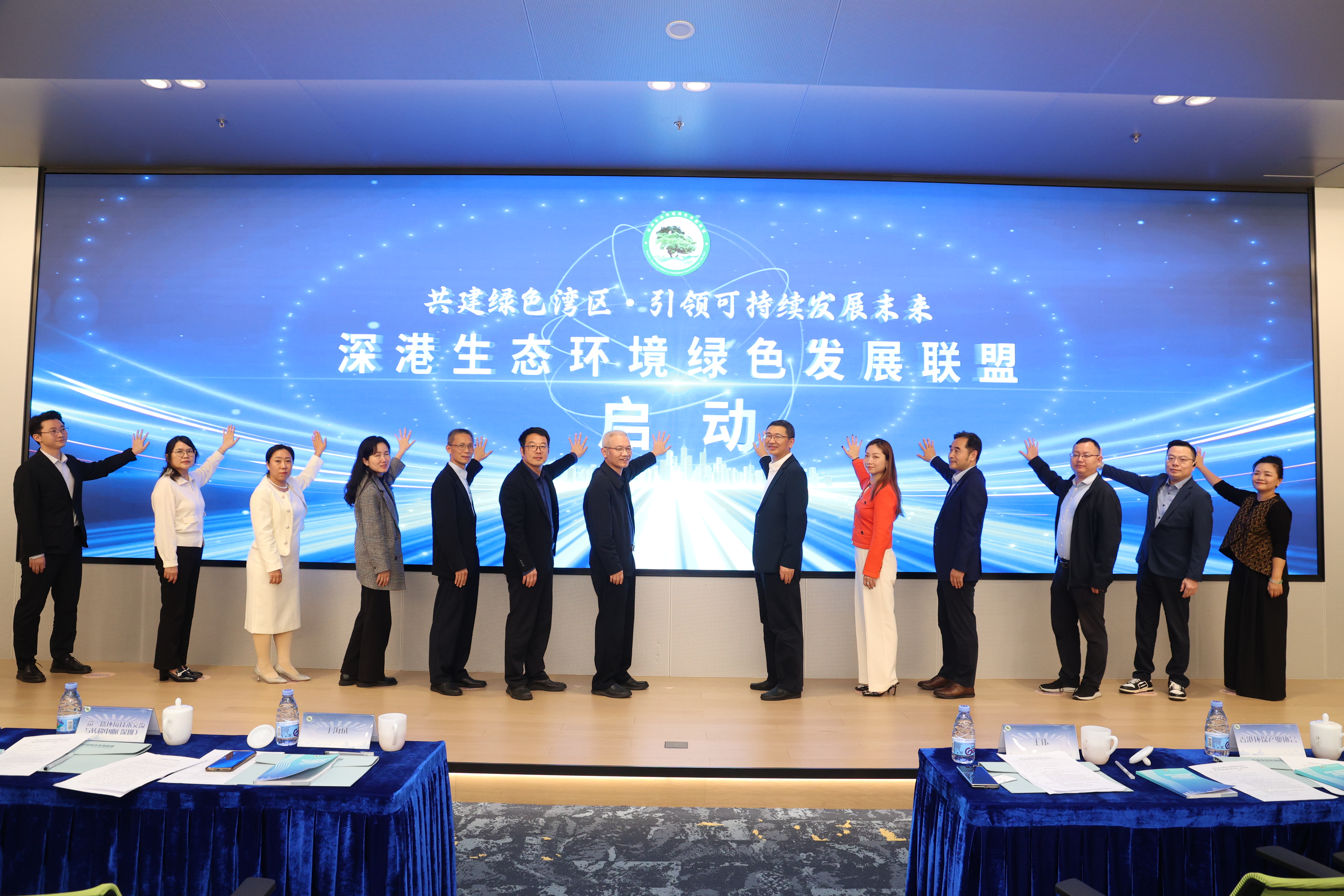
On January 27, 2026, the Shenzhen–Hong Kong Ecological and Green Development Exchange Event, themed “By the Mangroves · A Shenzhen–Hong Kong Ecological Symphony,” was successfully held in the Shenzhen–Hong Kong Science and Technology Innovation Cooperation Zone in the Hetao Shenzhen-Hong Kong Science and Technology Innovation Cooperation Zone. Representatives from government departments, industry associations, research institutions, and leading enterprises from Shenzhen and Hong Kong gathered to discuss key topics, including the alignment of environmental policies, exchanges in environmental protection technologies, and future plans for green development, jointly exploring new pathways for coordinated cross-border ecological and environmental cooperation.
Innovative Technologies and Products Take Centre Stage, Delivering Tangible Results
The technology and equipment exhibition area was one of the highlights of the event, showcasing cutting-edge environmental technologies and equipment covering pollution control, ecological monitoring, green materials, and other fields.
The VMAT vibratory membrane filtration system presented by Hong Kong Zhengchang Group uses high-frequency vibration technology to accommodate different water conditions. In industrial applications such as petrochemical processing and landfill leachate treatment, the system delivers multiple benefits, including water conservation, emission reduction, and lower operating costs.
Yanxi Environmental presented its beeswax membrane, which combines the natural sealing properties of beeswax with the antibacterial properties of traditional Chinese medicine extracts, making it well suited to low-carbon and environmentally friendly packaging applications. Shenzhen Kusi Biotechnology showcased a synthetic microbial agent for wastewater treatment. Based on deep-learning and microbial-community reconstruction technologies, the product effectively addresses the lengthy commissioning periods and high operating costs associated with conventional water-treatment facilities.
Other innovative products, including intelligent biodiversity-monitoring equipment and integrated gas-sampling drones, also attracted widespread attention from attendees due to their precise, efficient, and environmentally friendly technological advantages.
Policy Alignment Leads the Way as Shenzhen and Hong Kong Draw Up a Blueprint for Cooperation
Policy alignment was one of the central topics discussed at the event. In his address, Wang Wei, Director of the Futian Administration of the Shenzhen Municipal Ecology and Environment Bureau, noted that Shenzhen, as a pilot demonstration area for socialism with Chinese characteristics, has achieved remarkable progress in improving environmental quality and advancing green and low-carbon development.
Shenzhen and Hong Kong are linked by shared mountains and rivers and form an interconnected ecological system. Cross-border environmental governance is therefore a shared responsibility of both cities. Wang emphasised the need to further strengthen policy coordination and top-level planning to provide a solid foundation for environmental cooperation between Shenzhen and Hong Kong.
Cheng Man-chung, President of the Hong Kong Environmental Protection Industry Association, stated that Hong Kong has accumulated extensive expertise in green finance and alignment with international standards, while Shenzhen has clear advantages in market-oriented technology commercialisation and industrial scaling. The two cities should work together to overcome constraints arising from differences in environmental standards and barriers in approval procedures. By aligning policies and coordinating institutional mechanisms, Shenzhen and Hong Kong can generate a synergistic effect in which “one plus one is greater than two” and develop the Hetao Shenzhen-Hong Kong Science and Technology Innovation Cooperation Zone into a model for cross-border ecological collaboration.
In-Depth Technical Exchanges Build Consensus on Future Development
During the technical exchange and discussion session, experts, scholars, and business representatives from Shenzhen and Hong Kong shared practical experience and innovative achievements.
Zhao Yan, an engineer at the South China Institute of Environmental Sciences under the Ministry of Ecology and Environment, provided a detailed explanation of the top-level design and improvement pathways for developing an eco-friendly park in the Hetao Shenzhen-Hong Kong Science and Technology Innovation Cooperation Zone. She proposed a development approach centred on “positioning four functional zones and advancing construction in phases,” together with four major pathways: strengthening ecological conservation and restoration, deepening the green and low-carbon transition, improving coordinated smart management, and promoting institutional and mechanism innovation.
Xu Lijie, Director of the Shenzhen Institute of Standards and Technology, presented the results of the call for exemplary Shenzhen–Hong Kong ecological and environmental practices. A total of 46 high-quality cases were collected, covering five major fields, including smart environmental protection, pollution prevention and control, and the circular economy. These cases provide replicable models for regional ecological and environmental governance.
Ye Xiaolin, General Manager of the China Marketing Centre of Hong Kong Zhengchang Technology, shared practical applications of vibratory membrane technology in areas such as waste-oil regeneration and zero-liquid-discharge wastewater treatment. Liu Honggang, Project Director of Chuangleng Technology, introduced passive radiative-cooling technology. With its zero-energy-consumption and low-carbon characteristics, the technology aligns closely with the carbon-peaking and carbon-neutrality goals and ecological protection needs of Shenzhen and Hong Kong, providing robust technical support for the joint development of green and low-carbon cities.
Future-Oriented Planning Builds a Strong Foundation for Collaboration
During discussions on future work plans, all participating parties reached a consensus and clarified the direction of future development.
Xu Maoyu, Deputy Director of the Futian Administration of the Shenzhen Municipal Ecology and Environment Bureau, stated that three practical measures would be taken to advance ecological collaboration between Shenzhen and Hong Kong: optimising government-service procedures to provide efficient policy and resource support; promoting closer collaboration among industry, universities, and research institutions to facilitate technology transfer and project implementation; and publicising and promoting advanced concepts and successful experience to foster a favourable climate for environmental protection.
The event established a cross-border platform connecting Shenzhen and Hong Kong through policy coordination, mutual learning in technology, and industrial cooperation in the ecological and environmental sector.
Looking ahead, the two cities will continue to deepen collaboration in policy alignment, technological innovation, and industrial coordination. Through these joint efforts, the mangroves will grow greener and the Shenzhen River will become cleaner, injecting strong momentum into ecological-civilisation development across the Guangdong–Hong Kong–Macao Greater Bay Area.